
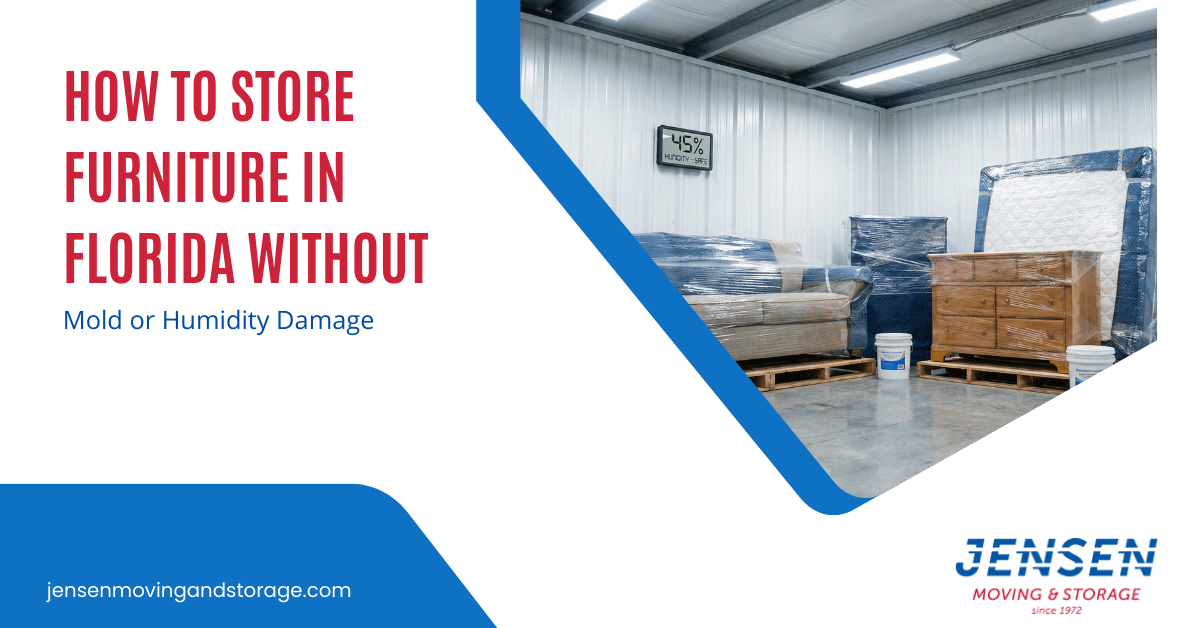
Florida’s warm, tropical climate is one of the best things about living on the Treasure Coast. But when it comes to storing furniture, that same heat and moisture can cause serious problems. Mold growth, warped wood, musty fabrics, and rust are all common issues for residents in Stuart, Palm City, and Port St. Lucie who need storage solutions. The good news? With the right preparation and environment, your furniture can come out looking just as good as the day it went in. At Jensen Moving & Storage, we help local families protect their belongings with secure moving and storage Stuart FL solutions built for Florida conditions.
Why Florida Humidity Is So Hard on Stored Furniture
South Florida regularly sees humidity levels between 70% and 90%, especially during the summer rainy season. That level of moisture creates a perfect breeding ground for mold and mildew on organic materials like wood, cotton, and leather.
When wood furniture absorbs excess moisture, it swells and warps. Joints loosen, finishes bubble, and structural integrity breaks down. Upholstered pieces are even more vulnerable because fabric and foam padding trap moisture deep inside where you cannot see it until the musty smell takes over. Metal hardware like drawer slides, hinges, and bed frames develop rust and corrosion over time. For anyone storing furniture on the Treasure Coast, understanding these risks is the first step toward preventing them.
Clean and Treat Every Piece Before It Goes Into Storage
One of the biggest mistakes people make is storing dirty furniture. Dust, body oils, food residue, and pet dander create a feeding ground for mold spores already floating in Florida’s humid air.
Here is how to handle different materials:
- Wood furniture – Wipe down with a damp cloth, let it dry completely, and apply a quality furniture polish or wax to seal the surface against moisture.
- Upholstered items – Vacuum all surfaces including under cushions and along seams. Treat stains with an appropriate cleaner and allow everything to air dry fully before wrapping.
- Leather pieces – Clean with a leather-specific cleaner and apply conditioner to prevent cracking and mildew in humid conditions.
- Metal hardware – Wipe with a dry cloth and consider applying a thin layer of protective oil to prevent rust.
The team at Jensen Moving & Storage recommends allowing at least a full day of drying time after cleaning before moving anything into a unit.
Disassemble What You Can
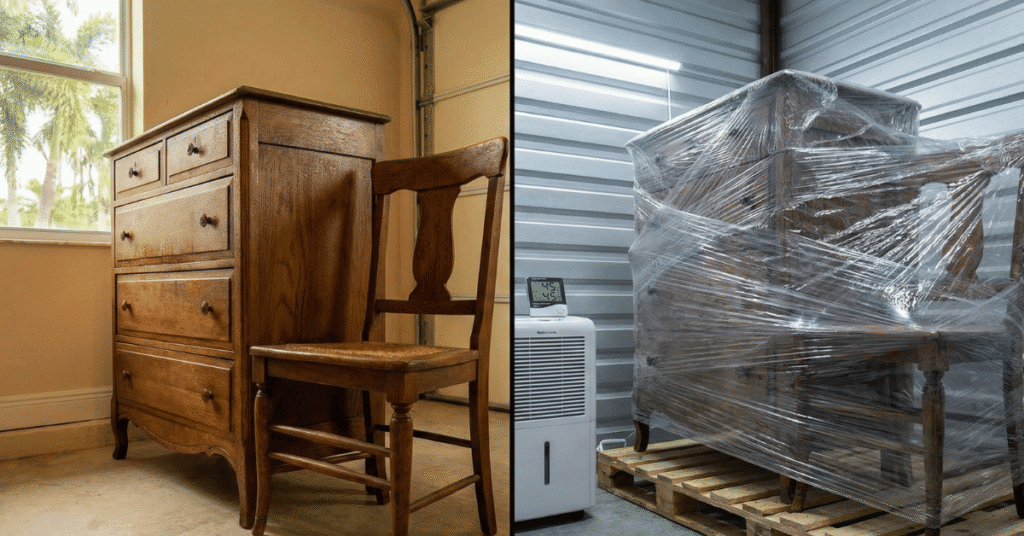
Breaking down furniture into smaller components does more than save space. It also reduces tight spots where moisture can get trapped and mold can grow undetected. Table legs, bed frames, shelving units, and modular furniture should all come apart when possible. Keep all nuts, bolts, and screws in labeled plastic bags and tape them to the corresponding piece.
Wrap the Right Way: Breathable Materials Over Plastic
This is where a lot of people go wrong in Florida. Plastic wrap seems like a smart protective choice, but in a humid climate, it traps condensation against the furniture surface. That trapped moisture has nowhere to go, and mold starts forming within weeks.
Instead, use breathable protective materials:
- Moving blankets and furniture pads – Provide cushioning while allowing air to circulate around the piece.
- Cotton drop cloths or muslin sheets – Ideal for draping over upholstered furniture and mattresses.
- Acid-free tissue paper – Useful for protecting delicate wood finishes and preventing scratches.
If you need plastic for short-term transit protection, remove it as soon as furniture reaches the storage unit. Jensen Moving & Storage offers professional packing services that use the right materials for Florida’s climate.
Organize Your Storage Unit for Maximum Airflow
How you arrange furniture inside the unit matters just as much as how you prepare it. Cramming everything tight against the walls blocks air circulation and creates pockets of stagnant, humid air where mold thrives.
- Raise furniture off the floor using wooden pallets, plastic risers, or cinder blocks. Even a few inches of elevation protects against ground moisture.
- Leave 3 to 4 inches of space between furniture and the walls to let air flow around every piece.
- Do not overpack the unit. Leaving open pathways between items promotes ventilation throughout the space.
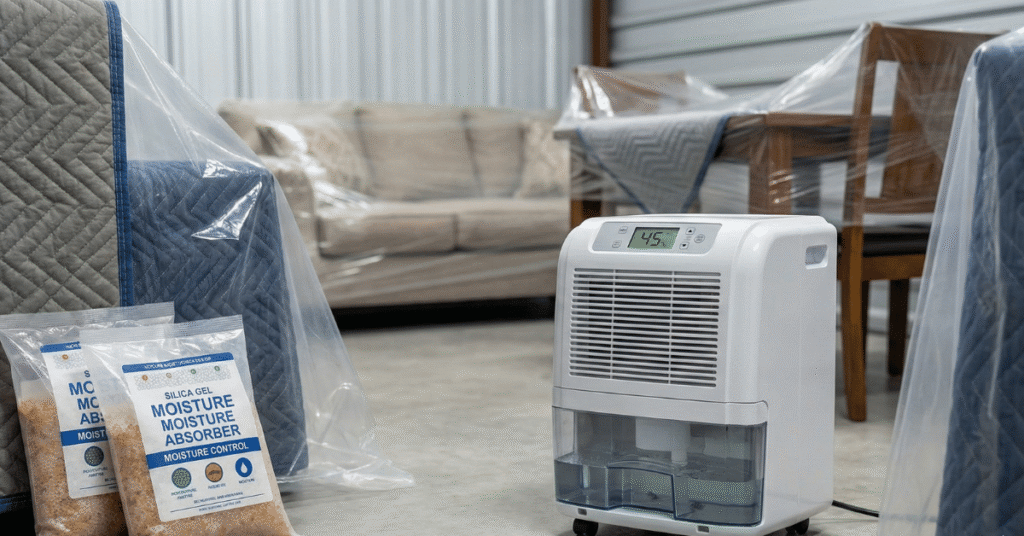
- Place moisture absorbers like DampRid, silica gel packets, or activated charcoal around the unit. Replace these every 30 to 60 days during humid months.
- Position sensitive items toward the center of the unit, away from exterior walls where temperature changes are greatest.
Choose Climate-Controlled Storage
This is the single most important decision you will make when storing furniture in Florida. A standard unit without temperature or humidity control is essentially a metal box sitting in the sun. Interior temperatures can exceed 120 degrees during summer, and humidity inside can spike well above outdoor conditions.
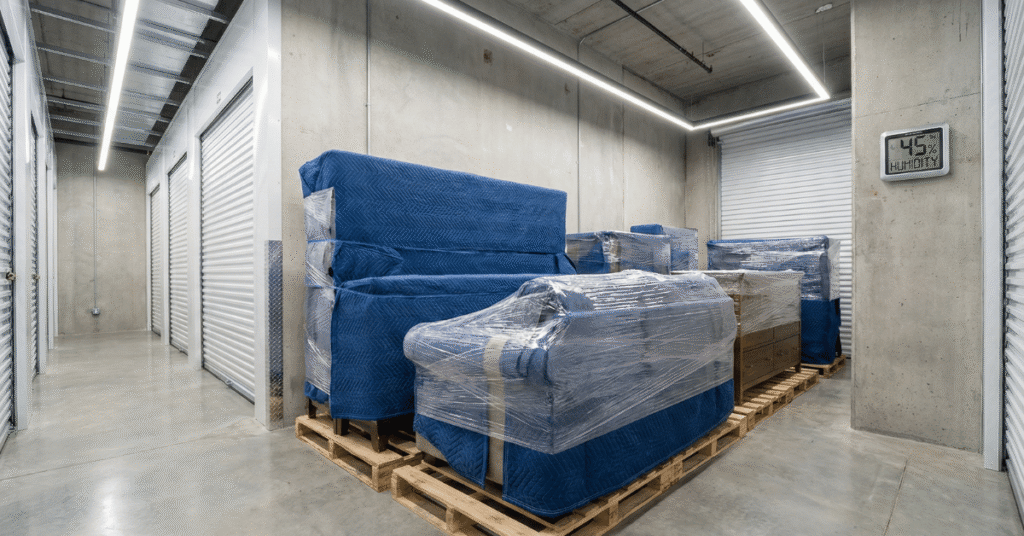
Climate-controlled storage keeps the interior between 55 and 80 degrees Fahrenheit and maintains humidity below 55%. That stable environment prevents the expansion cycles that crack wood, the moisture buildup that breeds mold, and the heat damage that deteriorates fabrics. For anyone storing wood furniture, leather, antiques, or pianos on the Treasure Coast, climate control is not optional. Jensen Moving & Storage provides secure, climate-controlled storage options in Stuart FL designed for Florida’s challenging conditions.
Items That Need Extra Attention in Florida
Some furniture types are more vulnerable than others in our climate. If you are storing any of the following, take additional precautions:
- Antique wood furniture – Older wood is more prone to warping, splitting, and finish deterioration. Use extra padding and ensure consistent climate control.
- Leather sofas and chairs – Leather absorbs moisture and develops mildew faster than most people expect. Condition thoroughly and wrap in breathable cotton.
- Mattresses – These are essentially giant sponges for humidity. Store upright if possible and never place directly on the floor.
- Pianos – The internal wood, felt, and strings are extremely sensitive to humidity changes. If you need piano movers Stuart FL, the Jensen Moving & Storage team has the experience to handle transport and storage of these delicate instruments.
Check on Your Unit Regularly
Even with climate control and proper preparation, inspect your stored furniture at least once a month during Florida’s humid season (May through October). Look for musty odors, visible mold spots, dampness, or warping. Swap out moisture absorbers on a regular schedule and confirm the climate system is working properly. Catching a small problem early is much cheaper than dealing with widespread damage after months of neglect.
Trust the Local Experts at Jensen Moving & Storage
Storing furniture in Florida does not have to end in damage and disappointment. With proper cleaning, breathable wrapping, smart unit organization, and climate-controlled storage, your furniture can stay protected for months or even years.
Jensen Moving & Storage is a licensed and insured moving company in Stuart FL serving Palm City, Port St. Lucie, and the entire Treasure Coast. Whether you need local movers in Stuart FL, long distance movers Florida, or a full-service packing and storage solution, our experienced team handles every step with care.
Ready to store your furniture the right way? Contact Jensen Moving & Storage today and let our Stuart FL movers help you protect what matters most.


