
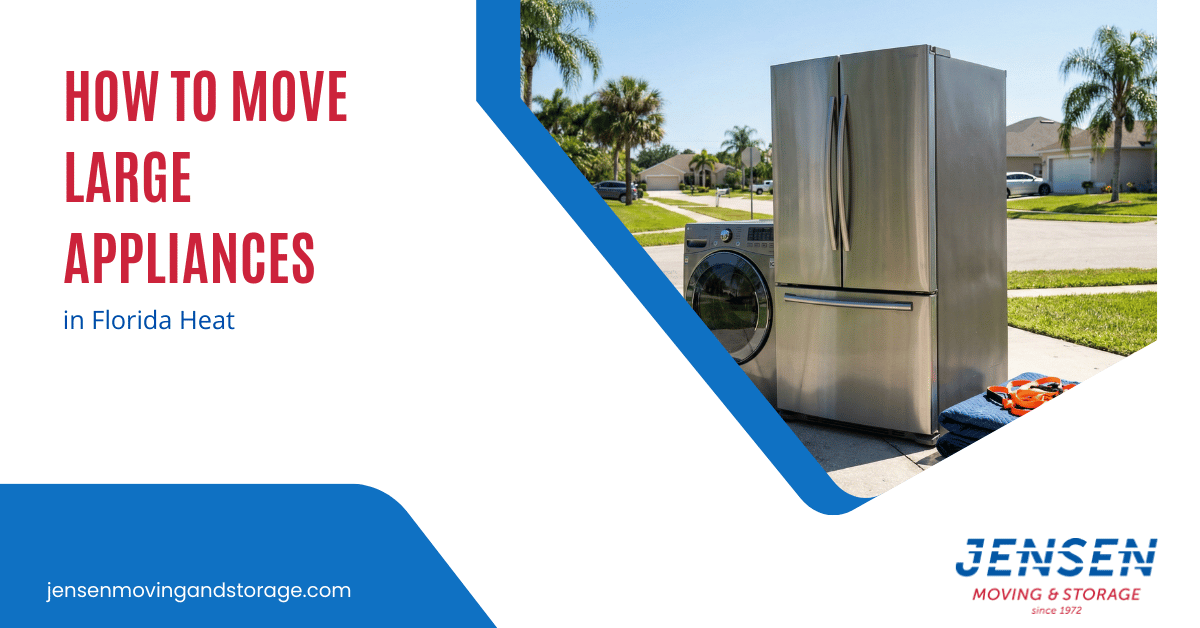
Moving a refrigerator or washer is tough enough on a cool day. Now try doing it when it’s 95 degrees outside with Florida humidity that makes it feel closer to 110. If you’re planning a move in Stuart, Palm City, Port St. Lucie, or anywhere along the Treasure Coast, knowing how to move large appliances in that kind of heat can save you from damaged equipment and a trip to the emergency room.
At Jensen Moving & Storage, we’ve helped hundreds of families relocate during Florida’s brutal summer months. This guide breaks down what you need to know before, during, and after your appliance move so everything arrives safely and nobody ends up overheated.
Why Florida Heat Makes Moving Appliances So Risky
Most people think about back injuries when they picture a tough appliance move. But in Florida, heat is just as dangerous as the heavy lifting itself. The Florida Department of Health has reported thousands of heat-related hospitalizations over the past decade, and outdoor physical labor during summer is one of the biggest risk factors.
When temperatures push past 90 degrees and humidity is high, your body struggles to cool down through sweat. That means you can go from feeling fine to experiencing heat exhaustion in a very short window, especially if you’re carrying or guiding a 300-pound refrigerator down a walkway.
Beyond the health risks, Florida heat and moisture can also affect your appliances directly. Condensation can build up inside units during transport, rubber seals and gaskets can soften or warp, and electronics may be sensitive to prolonged heat exposure in a closed truck. Planning ahead is not optional here. It’s a must.
How to Prepare Your Appliances Before Moving Day
Preparation is where most successful appliance moves are won or lost. Doing this work the day before gives you a head start and reduces the amount of time you spend outside in the heat on moving day.
Refrigerators and Freezers
- Unplug and defrost your fridge at least 24 hours before the move
- Remove all food, shelves, and drawers and pack them separately
- Clean and dry the interior thoroughly to prevent mold, which grows fast in Florida humidity
- Disconnect the water line if you have an ice maker, and let it drain completely
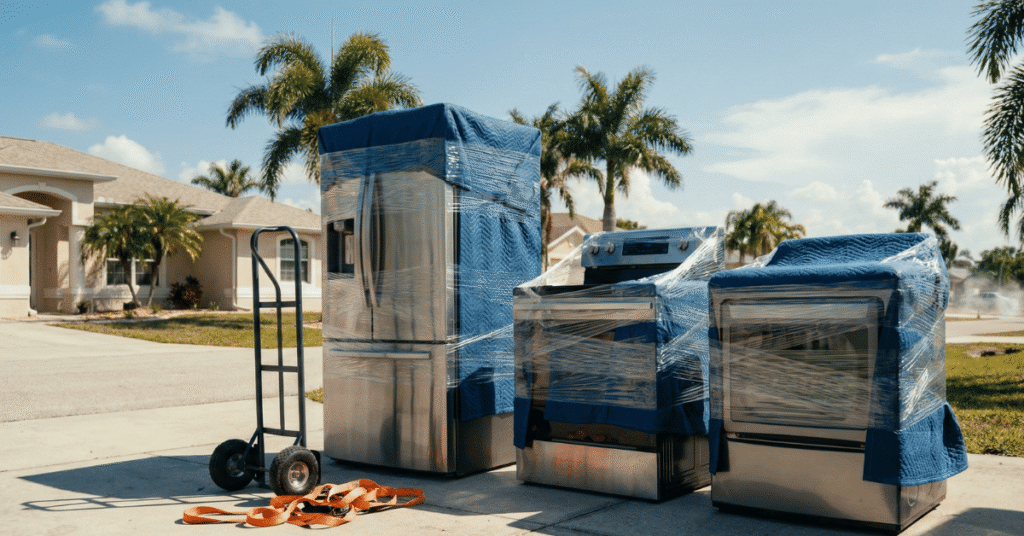
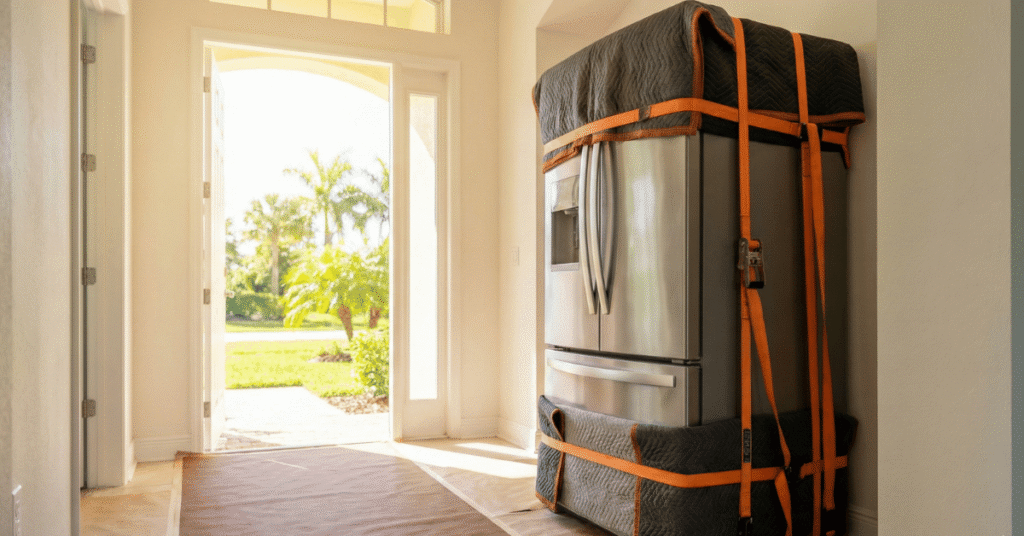
- Tape the doors shut and wrap the exterior with moving blankets
Washers and Dryers
- Disconnect water hoses and drain any remaining water from the lines
- Secure the washer drum with shipping bolts (check your owner’s manual for the original hardware)
- Clean the lint filter and detach the dryer vent hose
- Tape doors closed and wrap with blankets to prevent scratches during transport
Ovens, Stoves, and Dishwashers
- For gas appliances, have a licensed technician disconnect the gas line before moving day. Professional movers are not certified to handle gas connections.
- Remove oven racks, grates, burner caps, and any removable parts
- Clean the exterior so it’s easier to grip safely
- Tape the oven door shut and secure all loose cords
Safety Tips for Moving Heavy Appliances in the Heat
This is the part that separates a smooth move from a dangerous one. Florida’s summer heat demands extra precautions beyond the standard lifting advice.
- Start early. Schedule your move to begin at 7 AM or earlier. Once you hit mid-morning, temperatures climb fast and so does your risk for heat illness.
- Hydrate before you’re thirsty. Drink water consistently throughout the day. By the time you feel thirsty, you’re already behind on hydration.
- Take breaks every 20 to 30 minutes. Step into shade or an air-conditioned space to cool down. This is not laziness. It’s safety.
- Wear the right clothing. Lightweight, light-colored, breathable fabrics help your body regulate temperature. Always wear closed-toe shoes with good traction.
- Watch for warning signs. Heavy sweating, dizziness, nausea, headache, and muscle cramps are all signs of heat exhaustion. If someone stops sweating and becomes confused, that could be heat stroke, which is a medical emergency.
Jensen Moving & Storage crews train specifically for Florida conditions. Our team knows how to pace a move, rotate heavy tasks, and keep the job safe even when the temperature is working against everyone.
Tools and Equipment That Make the Job Easier
Having the right tools is just as important as having extra hands. Here’s what you’ll need if you’re handling appliances yourself:
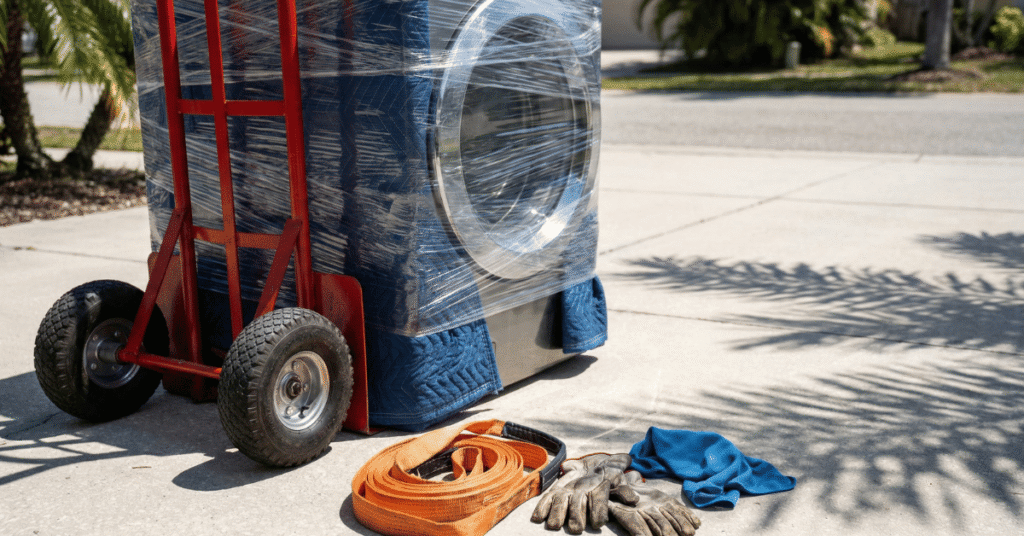
- Appliance dolly with straps for moving refrigerators and washers safely
- Furniture sliders to protect your floors and reduce the effort needed to move units across tile or hardwood
- Moving blankets to shield appliance surfaces from dings and scratches
- A loading ramp for getting heavy items into the truck without lifting
- Stretch tape to keep doors, cords, and loose parts secured during transport
If you’re hiring Jensen Moving & Storage, our team arrives with all of this equipment ready to go, so you don’t have to worry about renting or buying anything.
Protecting Your Appliances From Heat and Humidity During Transport
Once your appliances are loaded, the job isn’t done. A closed moving truck sitting in the Florida sun can heat up rapidly, and that creates its own set of problems.
Try to limit the amount of time appliances spend sitting inside a hot truck. If there’s a gap between your move-out and move-in dates, Jensen Moving & Storage offers secure storage solutions in Stuart that protect your belongings from heat and moisture damage.
After unloading at your new home, let your refrigerator sit upright for at least two to four hours before plugging it in. This allows the compressor oil to settle properly. Wipe down all appliances for condensation before connecting them, and inspect rubber seals and gaskets for any signs of softening or warping from the heat.
Why Hiring Professional Movers Makes a Real Difference
You can absolutely move appliances yourself. But when you factor in Florida’s heat, the weight of these units, and the risk of damage to both your body and your equipment, hiring professionals starts to look less like a luxury and more like common sense.
Experienced movers understand how to work efficiently in the heat. They have the equipment to move a 400-pound fridge down a narrow hallway without scratching your walls or floors. And when something goes wrong, a licensed and insured team like Jensen Moving & Storage has you covered.
Our team serves Stuart, Palm City, Port St. Lucie, and the entire Treasure Coast with local moving, long-distance relocation, packing services, and storage solutions. Whether you need help with a full household move or just need someone to handle the heavy stuff, we’re here to make it easier.
Ready to Move? Let Jensen Moving & Storage Handle the Heavy Lifting
Moving large appliances in Florida heat is no small task. But with the right preparation, proper safety precautions, and a solid plan, it doesn’t have to be a nightmare either.
If you’d rather leave the heavy lifting to the pros, contact Jensen Moving & Storage for a free moving quote. Our licensed, insured team has the experience and equipment to move your appliances safely, no matter how hot it gets outside.


